
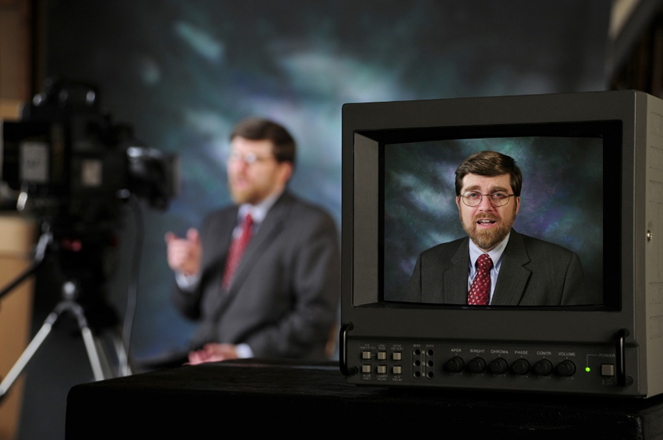
Television news professionals often look for some sensationalism to boost viewership and ratings, especially “investigative reporter.” It’s just a fact that people like controversial subject matter, and the networks are constantly trying to give them what they want.
In 1991, there was an investigative reporter for a major Houston television network with an aggressive attitude and somewhat of a reputation as a muckraker. He was considered a bulldog and his favorite targets were high profile people in positions of power. He presented himself as a do-gooder and an exposer of corruption.
There were plenty of dissenters who saw him more as a bully, unfair in his reporting, and careless with fact-checking. The consensus of many was that he would run with a story with few facts to back it up. Once it was on the air, he would then wait to be contacted by people and get information that he hoped would back up his storyline and allegations.
If he didn’t get corroborating information after the initial story ran, he would simply drop it and move on to another one. He seemed to have little concern for people damaged by his unsubstantiated stories. He was building a large group of enemies, many in high places.
In late 1991, the reporter began a series alleging improper relationships between some high profile Houston area attorneys and sitting judges. This was a powerful group, and they didn’t appreciate watching these allegations on their evening TV screens.
The group hired me to investigate the investigative reporter. They had no targeted behavior or anything specific, just a desire to find out if there was any ammunition for fighting back. They told me they had no idea if I would find anything useful, but to start surveillance on the reporter immediately. They wanted daily surveillance until I found something or they told me to stop.
I reached out to some of my media contacts to ask about the reporter. They generally considered him to be a drinker and a partier. My client group wanted me to report weekly what, if anything, I found of interest. I began the surveillance in February of 1992.
The first week or so of the surveillance was uneventful, turning up nothing of real interest. He was going about his daily routine and hitting local nightclubs in the evenings for some drinking, though nothing excessive.
However, a decision had to be made about continued surveillance requiring us to follow him to San Antonio. He was dispatched to cover a drug summit in San Antonio. President Bush and the leaders of six Latin American countries were meeting to discuss a “new spirit of cooperation” in the war on drugs.
My clients didn’t want me to stop and wait for his return, telling me to do what was necessary to continue daily surveillance of his activities in San Antonio. I sent two investigators to the city, one male and one female. The male investigator was a former cop with lots of surveillance experience, and his job was to watch and photograph the reporter’s daily activities.
The female investigator was both attractive and competent. We enjoyed an advantage in that she had been an investigative reporter for a California magazine. She still had her press credentials. This allowed her to get access to most of the venues and events at the conference posing as a currently active journalist.
By the second day on the scene, she managed to meet the investigative reporter subject. We were now working two different investigative approaches, surveillance and personal contact. Of course, she was presenting herself as a fellow reporter and trying to learn more about the subject.
Her major goal was to get him to talk about his coverage of my client group, what he was hoping to discover and where he saw the story going. This was the goal, as we hoped to get something negative in his comments about that specific story. As it turned out, we ended up taking something very different back to our clients.
When not working, the subject began to hang out with my female investigator. The other investigator documented everything with notes and photographs of their time together. The subject lived up to his partier reputation, drinking heavily every evening.
One evening, after some heavy drinking, he invited my investigator to his room. In these situations, the investigator is in charge, and makes her own decisions as to what she wants to do. She was determined to get something of value for our clients, so she decided to go to the reporter’s hotel room. She later told me that he was a rather small guy, and she felt she could take care of herself with him in his drunken state.
From the closing of the hotel room door, he was hitting on her. She handled it well, leading him on a little, letting him think there was hope while she tried to get him to tell her something useful. She was covertly recording the conversation as well. However, she wasn’t having any luck getting him to talk about his attorneys and judges story.
Then he made her another offer, one that would end up being of some value. He offered her some pot to smoke. She declined, telling him that she had respiratory problems and couldn’t smoke anything. She encouraged him to do so though. He took out a large bag of weed and smoked a joint in front of her.
She even got him to discuss the quality of the weed with her so she could validate what he was doing on the audio recording. This was pretty ironic, as he was there covering a drug conference. Once she had all of the information she could use, she excused herself saying she had to go back to work. She avoided him for the duration of her stay until she left the next day.
We returned to Houston and I reported to my clients. I had no idea what they would think about the information we delivered. We did have a short recording of him talking about our clients, but there really wasn’t anything actionable there. However, when we told them about the weed and they heard that tape, they seemed a lot more interested.
As requested, we prepared a detailed report of our investigation and delivered it with copies of the recordings. We delivered them a couple of days later, and our clients thanked us and said they would take it from there.
To this day I have no idea of what if anything they did with my report and the recordings. I can only guess, but can tell you that there was not another word or story relative to my clients by the reporter. Information is power, and it can be great leverage too!